


FallGrid
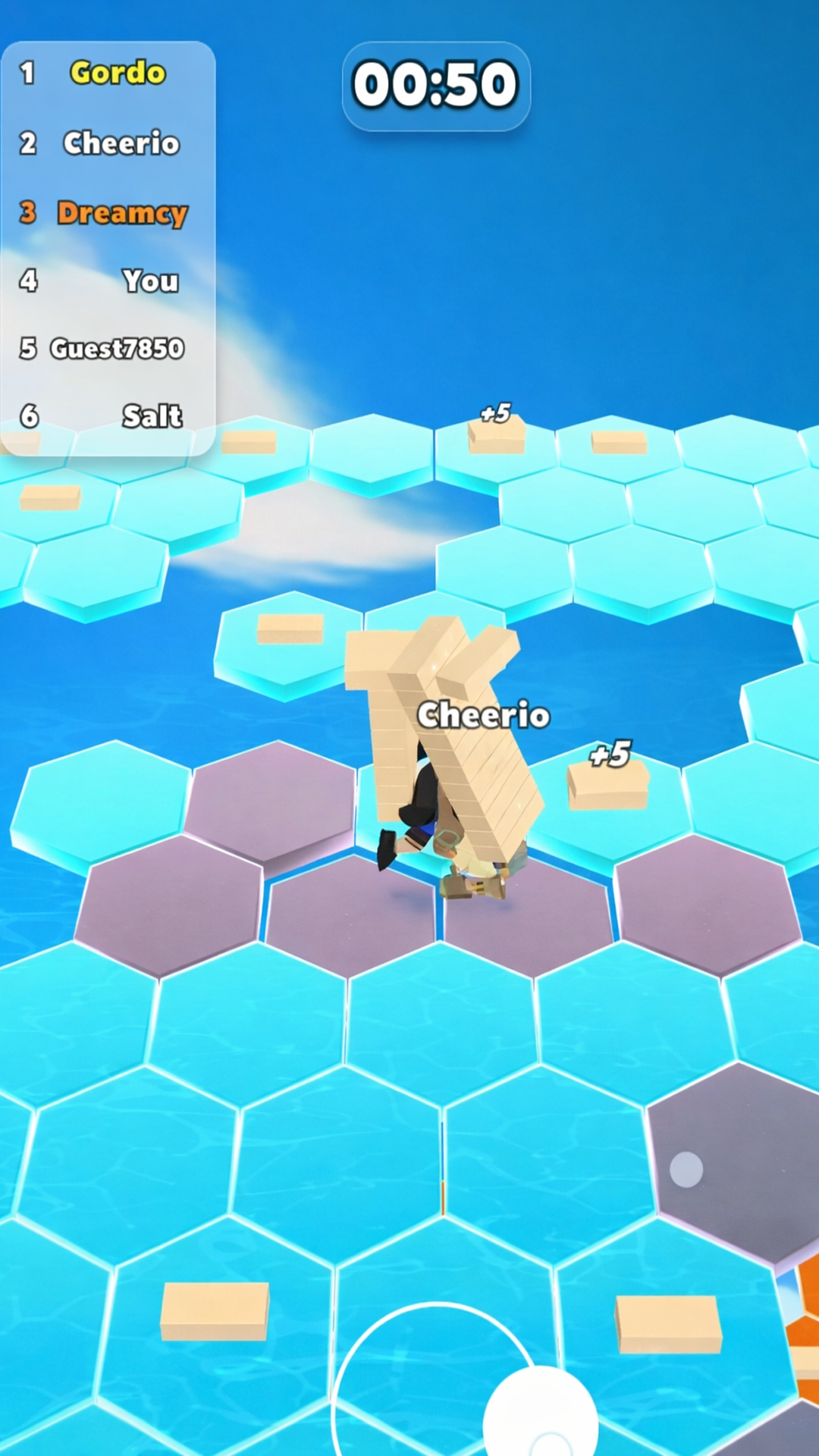
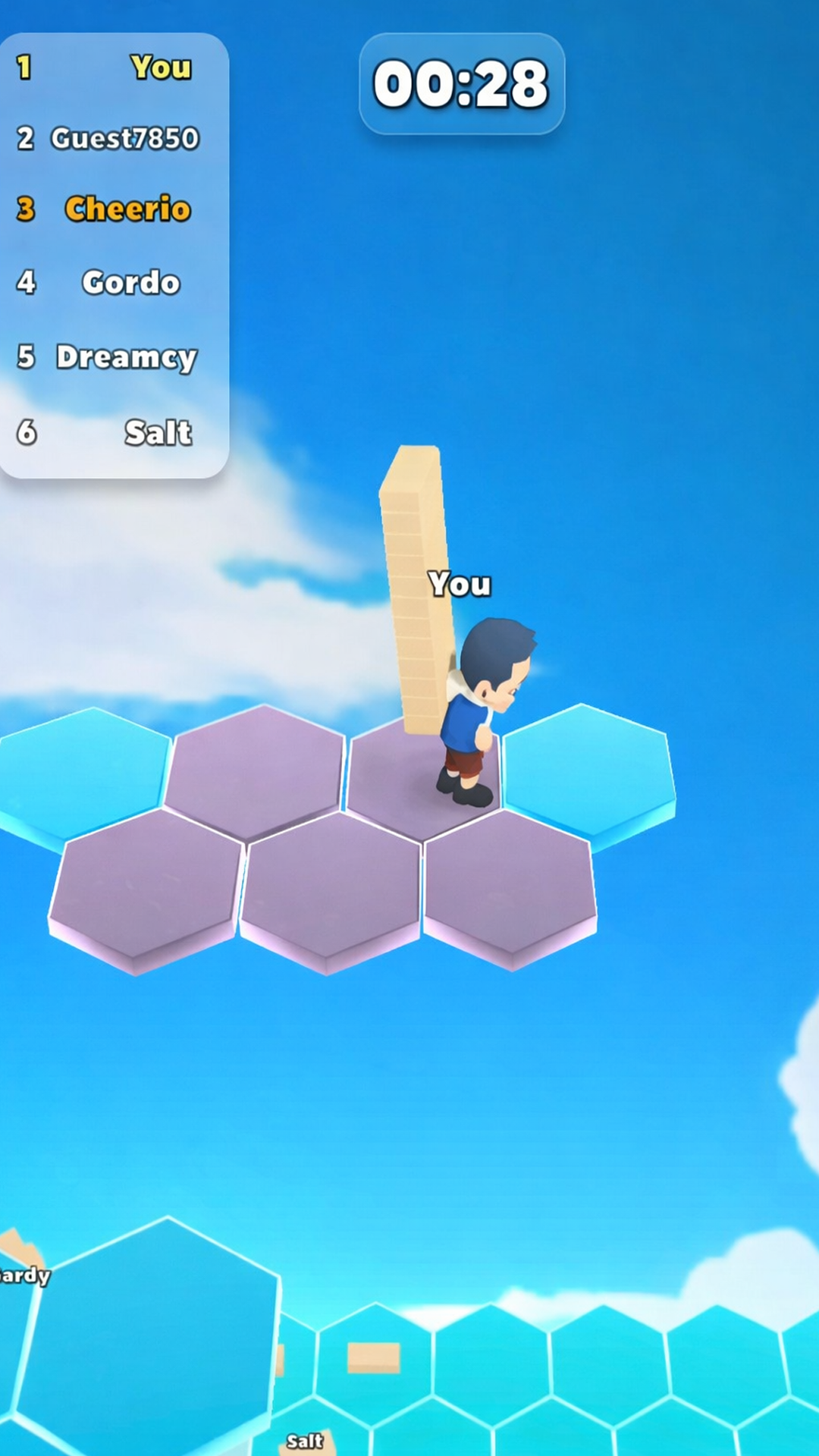
Players compete against five other characters on a multi-layered arena made of hexagonal tiles. The goal is to be the last player standing. Stepping on a tile causes it to disappear shortly after, forcing players to constantly move to avoid falling to lower levels or out of the arena completely.
- Hybrid-Casual
- Survival
Engine
UnityGenre
Hybrid-Casual, Survival, Battle RoyaleArt Style
Stylized 3DMode
Single playerPlatform
Mobile (Portrait Orientation)See it in action

How it plays
Joystick-Based Movement
Players control their character using an on-screen joystick for smooth and responsive movement. Precise control is essential for survival on the collapsing arena.
Disappearing Tile Mechanic
Hexagonal tiles disappear shortly after being stepped on, creating constant pressure to keep moving. This mechanic drives fast-paced gameplay and strategic positioning.
Multi-Layered Arena System
The arena is built with multiple vertical layers of hexagonal tiles. Falling through a broken tile drops players to a lower level, increasing risk as space decreases.
Plank Collection
Players can collect planks scattered across the arena tiles. These resources are limited and must be used wisely to extend survival time.
Bridge Building Mechanic
Collected planks can be used to build temporary bridges over missing tiles. Bridges enable strategic movement, escape routes, or trapping opponents.
Real-Time Multiplayer
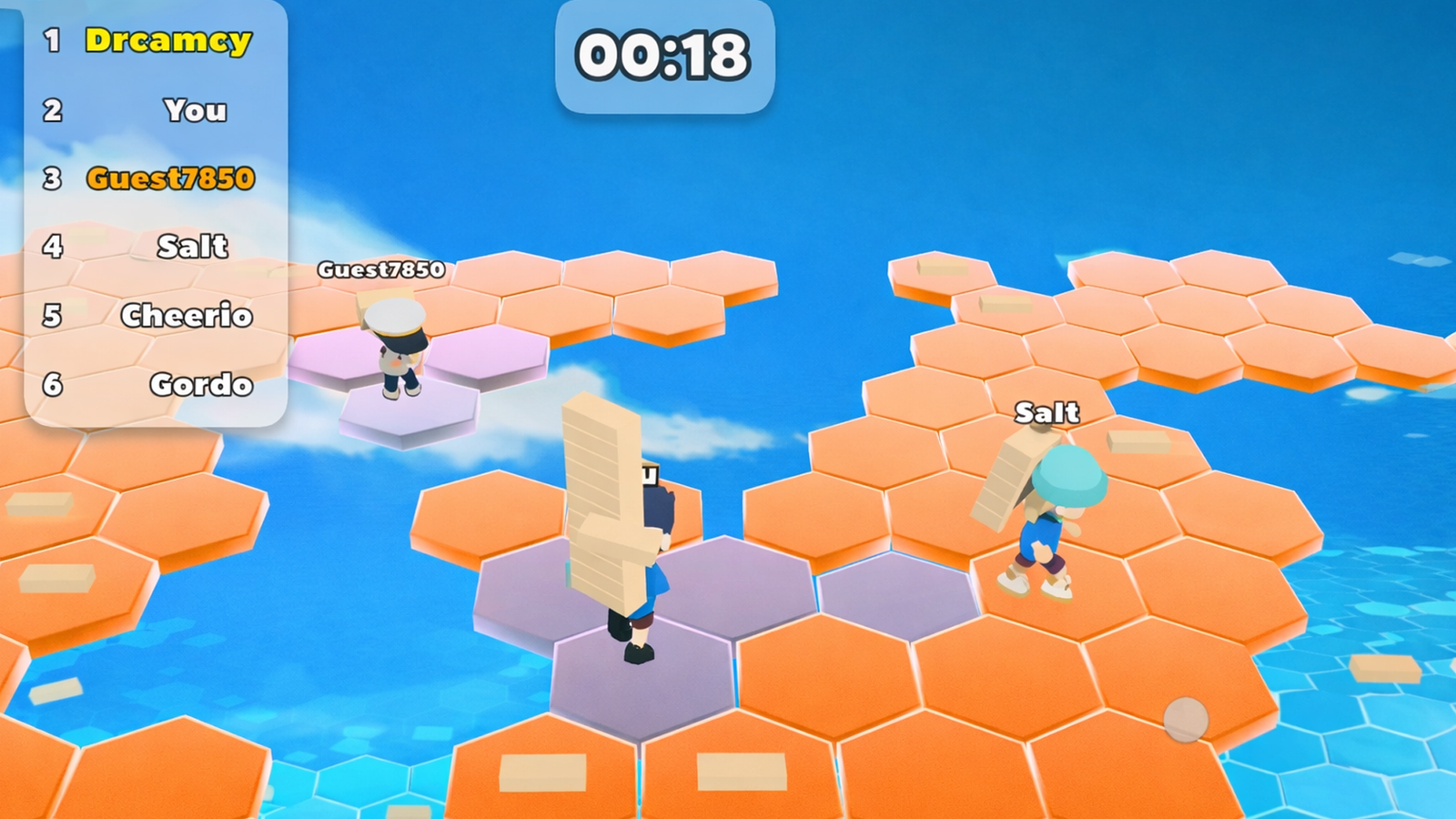
Six players compete simultaneously in real time on the same arena. Player actions directly impact others by removing tiles and blocking paths.
Survival-Based Win Condition
The objective is to remain on the platform longer than all opponents. The last player standing wins the round.
High-Pressure Endgame Phase
As tiles disappear and players fall, the playable area shrinks rapidly. This creates intense endgame moments that test reaction speed and decision-making.
Publisher-ready at 60 FPS
The Challenge
FallGrid’s six-player arena, collapsing multi-layer tiles and real-time physics pushed mid-tier hardware hard. On 4GB RAM devices the build dropped frames in endgame phases, cold-start load ran long, and release builds still involved manual steps — all blockers for worldwide publishing.
The Approach
Profiler-led, not guess-led. Frame captures ranked the killers: draw calls in the tile system were batched, GC spikes eliminated by pooling tile and plank objects, memory restructured with addressables, and load paths made async. CI/CD replaced the manual build ritual with signed, store-ready artifacts on every merge.
The Result
A stable 60 FPS through the high-pressure endgame on 4GB devices, cold-start cut in half, memory footprint down 40%, and zero manual steps between commit and store submission — the numbers that made FallGrid publisher-ready.
Shipped and store-ready
Have a game like this in mind?
From first spark to store-ready launch — bring your idea, we'll bring the engineering.