

Slide Run
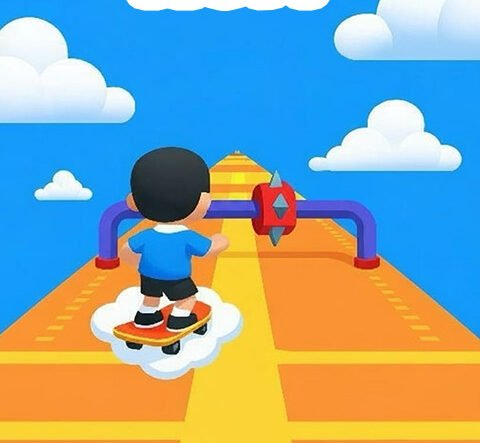
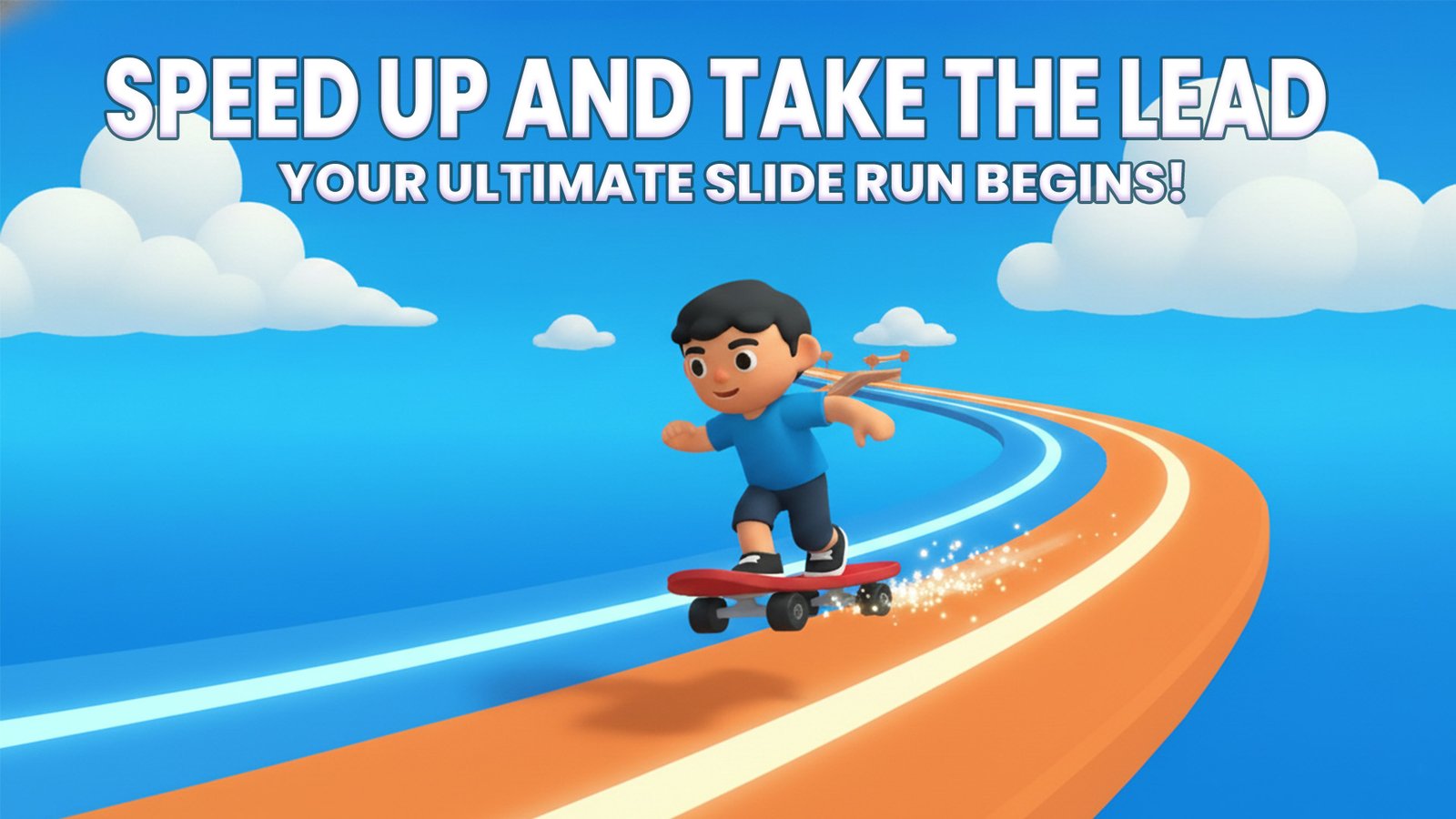
The player guides a character on a floating skateboard along a narrow, winding path high in the sky. The objective is to travel as far as possible by avoiding obstacles and staying on the path without falling off.
- Hybrid-Casual
- Runner
Engine
UnityGenre
Hybrid-Casual, RunnerArt Style
Bright, minimalist 3DMode
Single playerPlatform
Mobile (Portrait Orientation)See it in action
How it plays
Speed Boost Zones
Highlighted zones temporarily increase skateboard speed. Boosts add intensity and reward confident player control. Higher speed increases both risk and score potential.
Platforming Mechanics
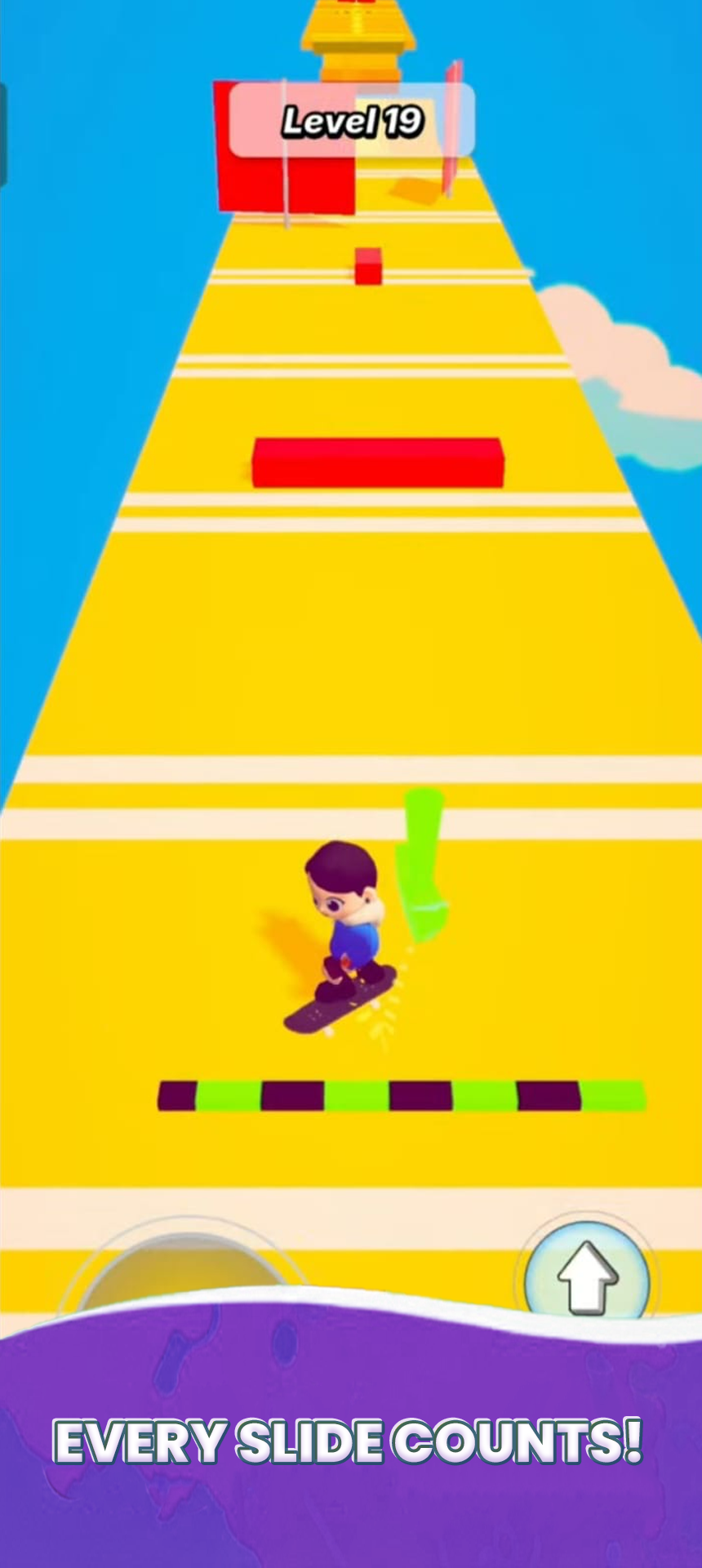
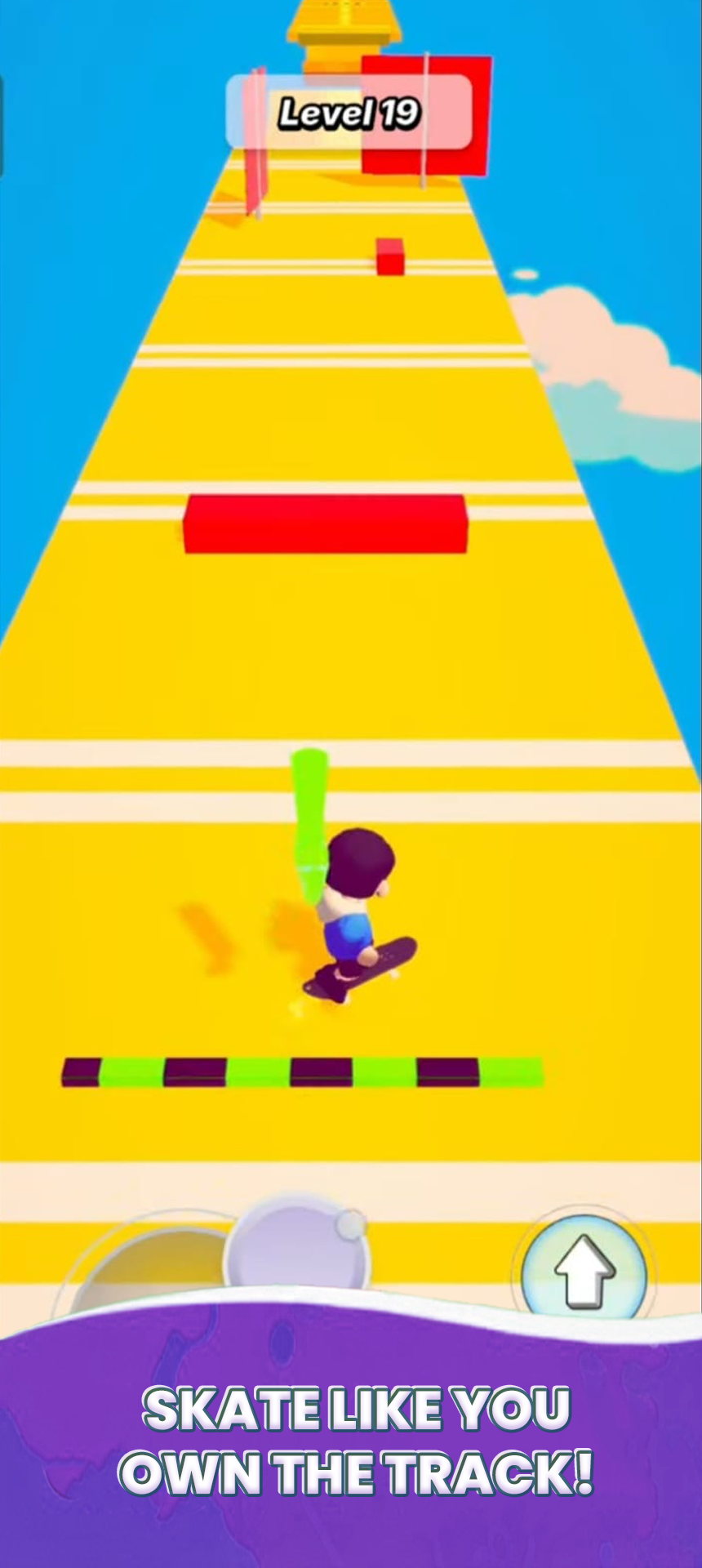
Players must precisely navigate a narrow, winding track. Hurdles require jumping, while barriers require sliding underneath. On-screen arrows guide players for quick reaction timing.
Controls
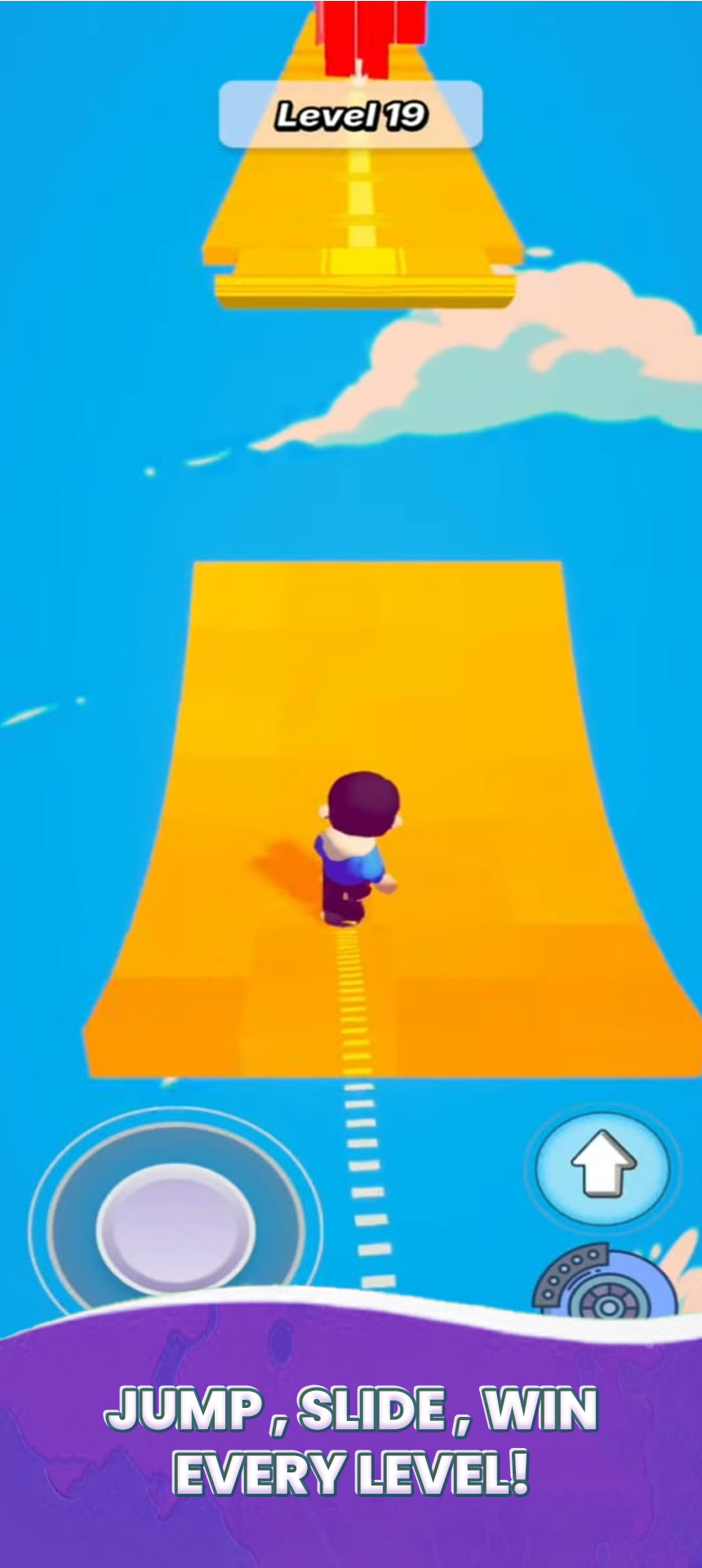
The player uses an on-screen joystick to move left and right. A separate action button is used to jump or activate a boost. Controls are designed for smooth, one-handed mobile gameplay.
Dynamic Obstacles
Obstacles appear in varied and evolving patterns. Some obstacles move, rotate, or shift positions. This keeps gameplay unpredictable and engaging.
Progressive Difficulty Scaling
Game speed increases as the player travels farther. Tracks become narrower with sharper turns over time. Difficulty progression encourages replayability and mastery.
Built for sky-high speed
The Challenge
A skateboard runner on narrow, winding paths in the sky, getting faster the farther you travel — camera, input latency and obstacle spawning have to stay in lockstep, because at boost speed even one late frame makes a fall feel unfair instead of earned.
The Approach
Track segments stream in ahead of the player and recycle behind, so the endless path costs constant memory. Touch input is read on the rawest available path for immediate lane response, jump/slide prompts are signalled by on-screen arrows timed to approach speed, and boost zones trigger as spline events rather than collider checks.
The Result
Speed that feels thrilling instead of cheap, deaths players accept because the game reacted exactly when they did, and a difficulty ramp that keeps runs replayable as tracks narrow and turns sharpen.
Shipped and store-ready
Have a game like this in mind?
From first spark to store-ready launch — bring your idea, we'll bring the engineering.